
Sharing Space
Why Community Cat Atlas Exists
Across neighborhoods, industrial areas, parks, commercial districts, rural communities, and transportation corridors, free-roaming cats live alongside people and wildlife every day.
Some are former pets that were abandoned.
Some were born outdoors and have never lived in a home.
Some survive independently.
Others depend on the support of people who provide food, water, shelter, or veterinary care.
No matter how they arrived, community cats have become part of the landscapes we share.
Yet community cats often exist at the center of competing perspectives.
For some, they represent compassion, caregiving, and a responsibility to animals that have few other options.
For others, they raise concerns involving wildlife, conservation, public health, and the long-term impacts of free-roaming animal populations.
Most discussions focus on one side of the issue or the other.
Community Cat Atlas was created to focus on something different.

The Shared Landscape
Community cats do not exist separately from human communities.
They live in neighborhoods.
They move through businesses and public spaces.
They occupy industrial sites, desert landscapes, parks, rail corridors, waterfronts, and transportation infrastructure.
In many places they share these spaces with birds, reptiles, mammals, pollinators, predators, and people.
The story of community cats is therefore not only a story about cats.
It is a story about how animals and people adapt to the same environments.
It is a story about coexistence.
An Unanswered Question
Despite decades of debate surrounding community cats, surprisingly few long-term efforts have attempted to systematically document how cat populations, wildlife, and human communities interact over time.
Important questions remain:
-
Why do some colonies disappear while others grow?
-
How do human decisions influence long-term outcomes?
-
What role does abandonment play?
-
How do cats move through human-modified landscapes?
-
How do cats and wildlife share space?
-
What can long-term observation reveal that short-term studies cannot?
Community Cat Atlas was created to help explore these questions through documentation, observation, research, photography, filmmaking, and storytelling.
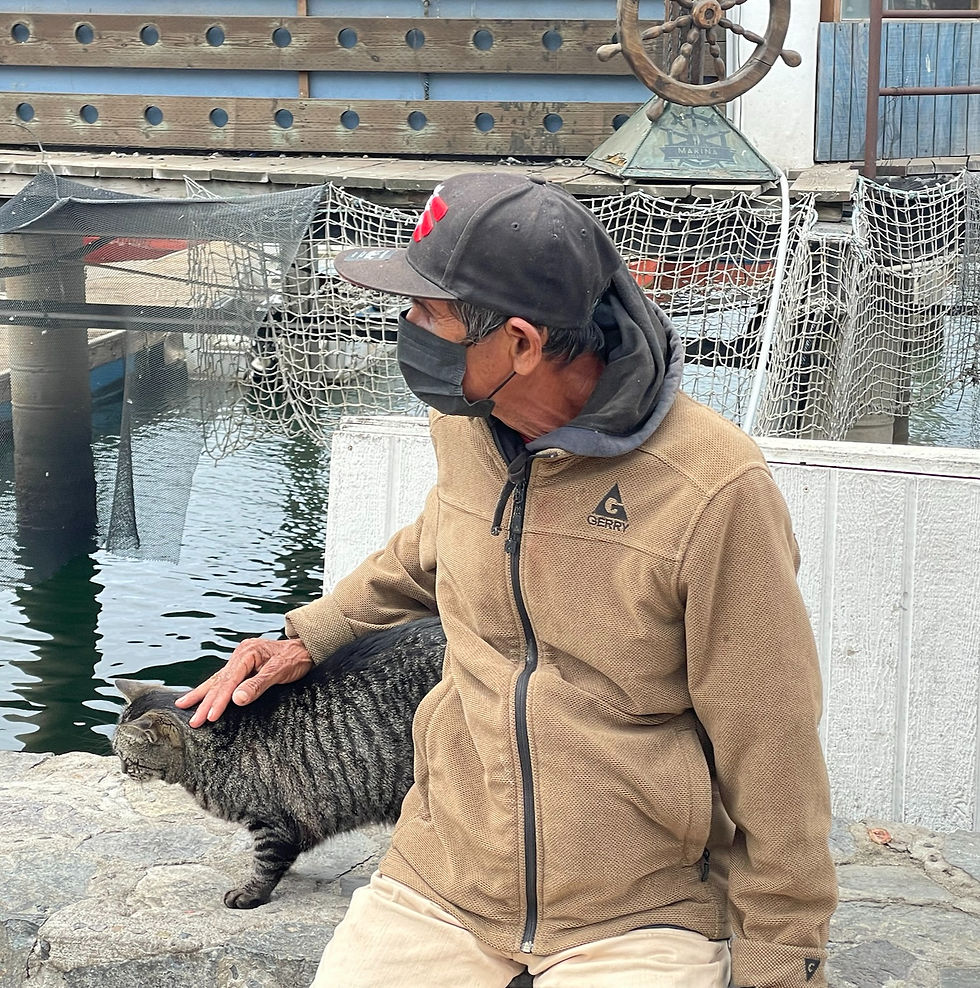
From Conflict to Coexistence
Community cats are often discussed through conflict.
Cats versus wildlife.
People versus policy.
Urban environments versus natural systems.
But conflict is only part of the story.
Every day, community cats, wildlife, and people continue to occupy the same landscapes.
Understanding how those relationships work is the first step toward understanding coexistence.
Community Cat Atlas does not begin with predetermined conclusions.
Instead, the project seeks to build a long-term record of what exists, what changes, and what can be learned through observation.
Why Documentation Matters
A photograph captures a moment.
A field observation captures an event.
A dataset captures a pattern.
A long-term archive captures change.
By combining photography, research, observatory monitoring, documentary storytelling, and data analysis, Community Cat Atlas seeks to document how communities, wildlife, and free-roaming cats coexist in a changing world.
The goal is not simply to document cats.
The goal is to better understand the relationships between animals, people, and the environments they share.
A Future Built on Understanding
Meaningful coexistence begins with understanding.
Understanding begins with observation.
And observation begins with documentation.
Community Cat Atlas was founded on a simple belief:
The first step toward coexistence is understanding the landscape we already share.